
A savings account should do two jobs well: keep your money safe and make it easy to use when the purpose of that money arrives. The interest rate matters, but it is only one part of the decision. A high advertised APY can lose its advantage if the account has fees, awkward transfer rules, poor customer support or conditions you did not notice.
This guide compares a high-yield savings account vs regular savings in plain English. It is designed for emergency funds, sinking funds, short-term goals and other cash that you do not want exposed to market risk.
The goal is not to name one “best bank.” Rates and account terms change. Instead, you will learn how to compare the features that matter so you can choose an account that fits the job you need it to do.
What Is a Regular Savings Account?
A regular savings account is a deposit account offered by a bank or credit union. It usually pays interest and is designed for money you do not need for everyday purchases.
Traditional banks often connect savings with checking, branches, ATMs and other services. The interest rate may be modest, but convenience can be strong if you already use the same institution for bills and direct deposit.
Regular savings may work well when
- You value branch access.
- You want instant transfers to your checking account at the same bank.
- You keep a small emergency buffer rather than a large balance.
- The account has no fee under your normal use.
- You prefer one bank for most household money.
What Is a High-Yield Savings Account?
A high-yield savings account is still a savings deposit account, but it generally aims to pay a more competitive APY than many basic savings accounts. These accounts are often offered by online banks, digital divisions of established banks, credit unions and some financial platforms.
The word “high-yield” is a marketing description, not a guarantee that one account will always pay more than every competitor.
The rate can change
Savings APYs are usually variable. A bank can raise or lower the rate as market conditions and its own pricing change. Do not choose an account assuming today’s rate will remain unchanged for years.
Understand APY Before Comparing Accounts
APY means annual percentage yield. It reflects the interest you can earn over a year, including the effect of compounding, assuming the rate remains in place and the balance meets the account terms.
Under the Truth in Savings Act, banks provide disclosures about interest rates, APY, fees and other terms. The Federal Deposit Insurance Corporation explains common deposit accounts and the consumer protections that apply.
Do not compare a rate with an APY as if they are identical
When comparing offers, use APY to APY where possible. Read the assumptions and conditions behind the advertised figure.
How Much Difference Can APY Make?

The value of a higher APY depends on your balance and how long the money stays in the account.
Simple example
Imagine Account A pays a very low APY and Account B pays a meaningfully higher APY. On a $500 balance, the annual dollar difference may be modest. On a $15,000 emergency fund held for a full year, the difference becomes more noticeable.
This is why it can make sense to separate the question “Which account is easiest to use?” from “Where should I keep a larger long-term cash reserve?”
Fees Can Wipe Out Interest Quickly
A savings account that earns interest but charges avoidable monthly fees can be a bad fit for a small balance.
Check for
- Monthly maintenance fees
- Minimum balance requirements
- Fees for paper statements
- ATM fees where the account includes card access
- Outgoing wire fees
- Expedited transfer fees
- Fees connected with linked checking or overdraft services
Do the math in dollars. If an account earns $40 in interest during a year but charges $60 in fees, the attractive APY did not help you.
Deposit Insurance Matters More Than the Marketing Name
For money that serves as an emergency fund or other safety reserve, verify how the deposits are insured.
The FDIC provides insurance for eligible deposit accounts at FDIC-insured banks. The standard coverage amount is $250,000 per depositor, per insured bank, for each ownership category.
Credit unions can use federal share insurance through the National Credit Union Administration when the institution is federally insured. Verify the institution rather than assuming a familiar-looking app is itself a bank.
Be extra careful with financial apps
Some technology companies are not banks. They may place customer funds with partner banks. Deposit-insurance treatment can depend on the exact account structure and recordkeeping. Read the disclosures and identify which insured bank actually holds the deposit.
Do Not Confuse Savings Accounts With Investment Products
A bank may offer savings accounts and also sell mutual funds, stocks, annuities or other products. The FDIC does not insure investments just because they are offered through a bank.
If your goal is an emergency fund, make sure you are opening an insured deposit account rather than moving the money into an investment product with market risk.
Access Speed Is Part of the Account’s Value
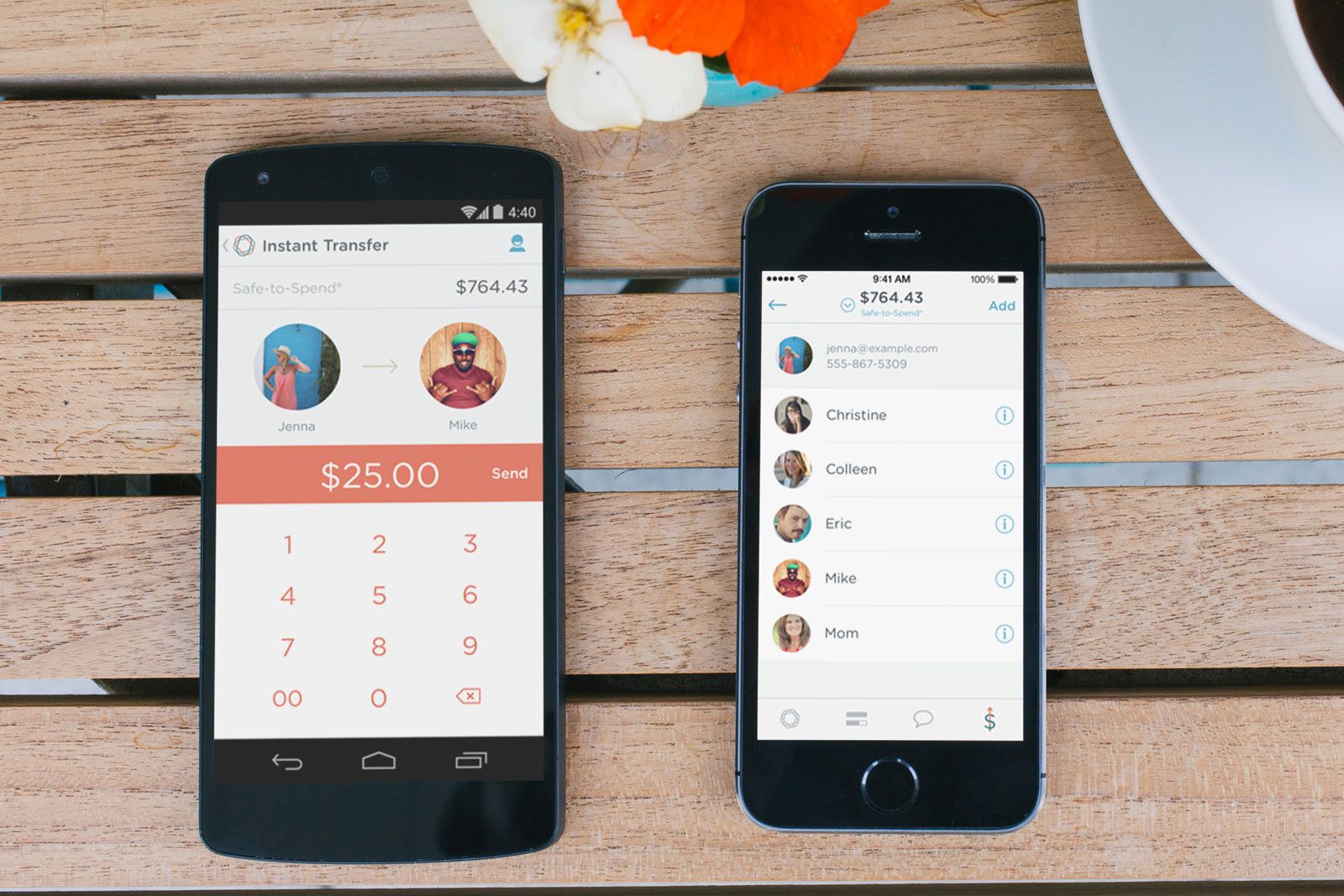
An emergency fund that takes several days to reach your checking account may still be useful, but you need a plan for the gap.
Compare access questions
- Can you transfer money to checking instantly within the same institution?
- How long do external transfers normally take?
- Is there an ATM card?
- Can you withdraw cash at a branch?
- Are there daily transfer limits?
- Can you initiate a same-day wire if a true emergency requires it?
Do not choose an account based only on APY if you will panic every time you need access.
A Two-Layer Emergency Fund Can Solve the Access Problem
You do not have to keep every emergency dollar in one place.
Layer one: immediate buffer
Keep a smaller amount at the bank you use for checking. This can cover an urgent car repair, pharmacy expense or utility payment without waiting for an external transfer.
Layer two: larger reserve
Keep the rest in a competitive insured savings account that may pay a better APY. This money can cover larger emergencies or several weeks of essential expenses.
Our emergency fund guide explains how to build the reserve gradually.
Minimum Balance Rules Can Change the Real Return
Some accounts pay the advertised APY only if you meet certain balance or activity conditions. Others may charge a fee when the balance falls below a threshold.
Ask before opening
- Is there a minimum opening deposit?
- Is there a minimum balance to earn the stated APY?
- Is there a different APY above or below certain balance tiers?
- Can a monthly fee be waived?
- What happens if the balance temporarily falls?
An account with a slightly lower APY and no conditions can be better than an account with a headline rate you rarely qualify to receive.
Compare Compounding and Interest-Crediting Details
Banks can compound and credit interest on different schedules. APY is designed to make comparison easier, but the account disclosure still matters.
For most consumers, the exact compounding schedule matters less than the APY, fees and balance conditions. Do not spend hours optimizing a tiny mathematical difference while ignoring a monthly maintenance fee.
Look at Customer Service Before You Need It
Savings accounts are simple when everything works. The quality of the institution becomes more important when a transfer is delayed, a login is locked or a fraud alert freezes the account.
Test the support setup
- Is phone support available when you are likely to need it?
- Is secure messaging available?
- Does the institution have branch support?
- Are complaint and dispute processes easy to find?
- Can you add a trusted contact or beneficiary where appropriate?
You do not need premium service. You need a clear path to resolve a problem.
Security Features Should Be Standard, Not Optional Extras
Use strong account security for any place holding emergency savings.
Look for
- Multi-factor authentication
- Login alerts
- Transfer notifications
- Device management
- Easy password reset with identity verification
- Fraud reporting tools
Do not reuse the same password you use for email or shopping sites. Your email account is especially important because password-reset messages often go there.
High-Yield Savings Works Well for Sinking Funds Too
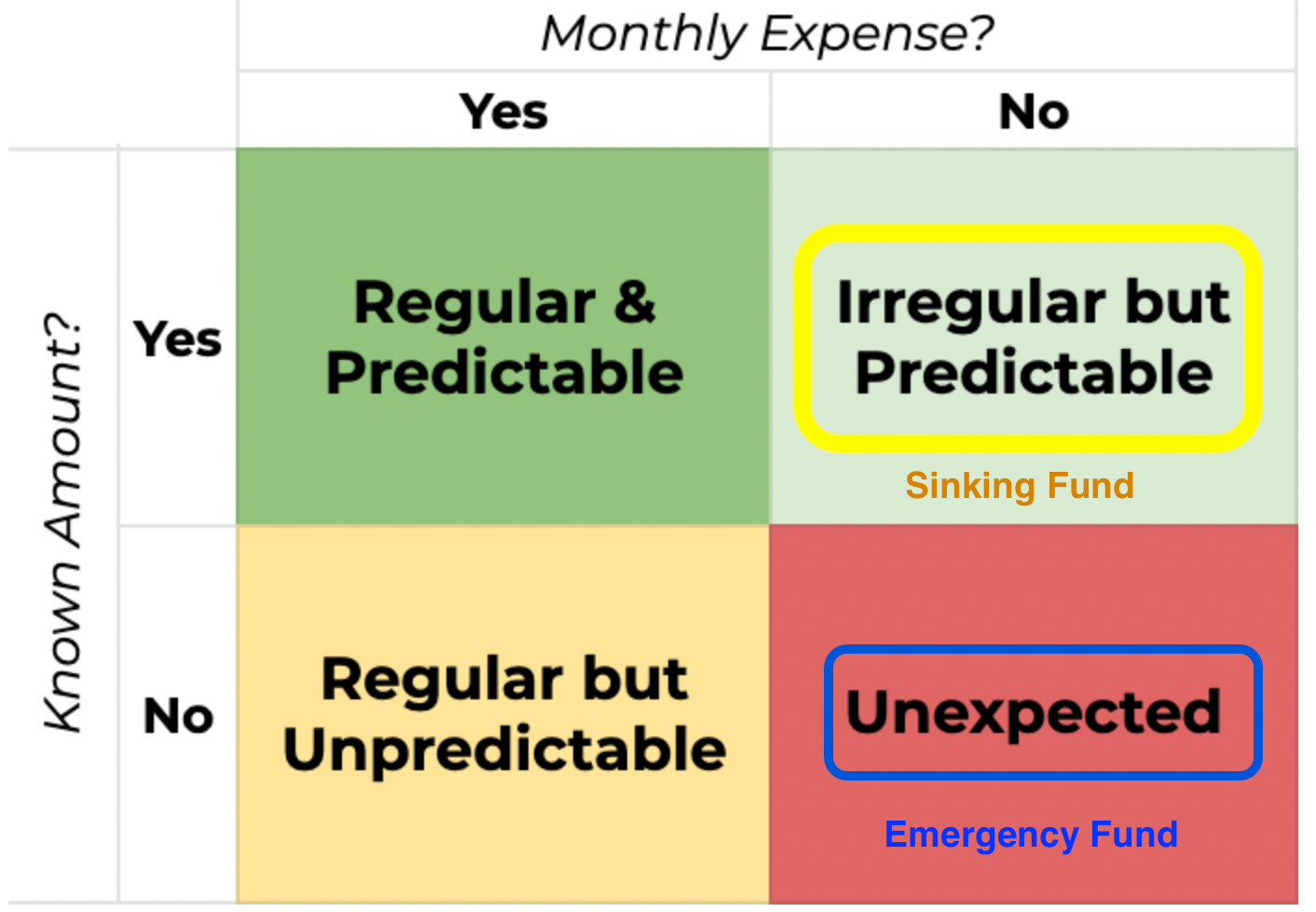
Not every savings dollar is for emergencies. Sinking funds are planned reserves for predictable costs such as car repairs, annual insurance, school expenses, travel or home maintenance.
If the money will sit for several months, earning a competitive APY can be useful. Just make sure the account lets you organize goals in a way you can manage.
Our sinking funds guide shows how to divide irregular expenses into monthly savings targets.
When a Regular Savings Account May Be the Better Choice
Higher interest is not always worth extra complexity.
A regular savings account can be sensible if
- You keep only a small balance.
- You need same-bank instant transfers.
- Your current bank waives all relevant fees.
- You rely on branch service.
- The dollar interest difference is small.
For example, moving a $300 buffer to another bank for a better APY may produce little annual benefit while making access less convenient.
When a High-Yield Savings Account May Be More Useful
It can be attractive if
- You have a larger emergency fund.
- You can wait for normal transfers.
- The account has no meaningful fees.
- The deposit is properly insured.
- You are comfortable with online banking.
- You want separate savings away from everyday spending.
The separation itself can help some households. Money kept away from the daily checking balance can be harder to spend impulsively.
Do Not Chase Every Rate Change
Moving your savings every few weeks to capture a slightly higher APY can create work, tax paperwork, transfer delays and account-management risk.
Set a switching rule
Decide what would justify opening a new account. For example, you may require a meaningful APY improvement, no monthly fee, verified deposit insurance and a transfer process that fits your needs.
This prevents you from making decisions based on a headline rate alone.
Real-World Example: Emergency Fund vs Daily Buffer
Marcus keeps $1,000 in savings at the same bank as his checking account. He likes the instant access but notices the savings APY is low. He also has another $8,000 that he rarely touches.
Instead of moving everything, Marcus leaves the $1,000 buffer where it is. He moves the larger reserve to an insured high-yield savings account with no monthly fee and links it to checking.
He tests a small transfer before moving the full amount. He also turns on login and transfer alerts. The result is a simple two-layer system: fast access for small problems and better interest for money that usually stays untouched.
Compare Accounts With a Simple Scorecard
| Feature | Account A | Account B |
|---|---|---|
| APY | ||
| Monthly fee | ||
| Minimum balance | ||
| Deposit insurance | ||
| Transfer speed | ||
| ATM/branch access | ||
| Customer support | ||
| Security tools | ||
| Goal buckets |
Choose based on your actual use, not on which column has the biggest rate.
Common Savings Account Mistakes
- Choosing only by APY.
- Ignoring monthly fees.
- Assuming every finance app is an insured bank.
- Keeping an emergency fund in an investment because the return looks higher.
- Moving every dollar away from instant access.
- Not testing transfer speed.
- Reusing weak passwords.
- Chasing tiny rate differences constantly.
- Keeping too much cash in checking where it is easy to spend.
- Opening several accounts without a clear purpose for each one.
Frequently Asked Questions
Is a high-yield savings account safe?
It can be, when it is an eligible deposit account at an FDIC-insured bank or properly insured credit union and your balance is within applicable coverage rules. Verify the institution and account structure.
Can a high-yield savings APY go down?
Yes. Savings rates are generally variable and can change.
Is a high-yield account always better than regular savings?
No. Fees, access speed, support, branch needs and balance size can make a regular savings account a better fit.
Should my emergency fund be in checking?
You can keep a small immediate buffer in checking or same-bank savings while holding the larger reserve in a separate insured savings account. The right split depends on your access needs.
Does FDIC insurance cover investments?
No. FDIC insurance covers eligible deposit products at insured banks. It does not insure stocks, mutual funds or other investments.
Conclusion: Pick the Account That Fits the Job
The high-yield savings vs regular savings decision is not really about which product sounds more advanced. It is about matching the account to the purpose of the money.
Compare APY, fees, minimums, insurance, transfer speed, support and security. Keep enough money accessible for real emergencies. Avoid market risk for cash you may need soon. Then review the account occasionally rather than chasing every small rate change.
A good savings account should be boring in the best possible way: safe, clear, low-cost and ready when you need the money.