A monthly budget works when it reflects your real income, real bills, and real priorities—not an ideal version of how you think you “should” spend. The goal is not to account for every dollar perfectly. The goal is to know what must be paid, what can change, what needs to be saved for, and how much flexibility you actually have before the month is over.
If previous budgets lasted only a few days, the problem may not have been a lack of discipline. Many budgets fail because they ignore irregular expenses, use gross income instead of take-home pay, set unrealistic category limits, or never get updated when life changes. This guide builds a monthly budget from the ground up so it can survive a normal month—not just a perfect one.

Step 1: Calculate Your Monthly Take-Home Income
Start with the money that is actually available to spend after taxes and payroll deductions. The Consumer Financial Protection Bureau recommends using monthly net income when building a spending plan.
Include regular income that reliably supports household expenses:
- Net wages or salary
- Regular part-time income
- Reliable self-employment income after business costs and taxes
- Benefits or pension income
- Regular support payments you actually receive
- Other dependable recurring income
Do not build the budget around an occasional bonus, tax refund, overtime shift, or side-gig payment that may not happen. Treat those as extra money when they arrive.
What if your income changes every month?
For irregular income, use a conservative baseline. One approach is to look at several months of income, identify the amount you can reasonably expect in a weaker month, and build essential spending around that. During stronger months, use the extra to build a buffer, fund irregular expenses, or advance goals.
Step 2: Review the Last 2–3 Months of Spending
A budget made from memory will usually miss something. Review bank statements, credit-card statements, payment apps, and cash spending. The CFPB’s spending-assessment guidance recommends looking back across multiple months and remembering less-frequent expenses such as insurance, medical costs, gifts, school expenses, and vacations.
At this stage, do not judge the spending. Just record it accurately.

Step 3: Divide Expenses Into Four Useful Categories
1. Fixed essentials
- Rent or mortgage
- Insurance premiums
- Basic phone and internet
- Childcare
- Minimum debt payments
2. Variable essentials
- Groceries
- Utilities
- Fuel or public transportation
- Medication and healthcare
- Household supplies
3. Irregular but predictable expenses
- Vehicle maintenance
- Annual memberships
- School costs
- Holiday spending
- Insurance deductibles
- Clothing replacement
4. Flexible spending
- Dining out
- Entertainment
- Optional shopping
- Hobbies
- Premium subscriptions
This four-part structure is more useful than calling every expense either a “need” or a “want.” An irregular car repair may not happen this month, but it is still predictable over time and deserves a place in the plan.
Step 4: Add Savings as a Budget Category
Savings should not depend entirely on whatever happens to be left on the final day of the month. Give important savings goals a planned amount, even if the first contribution is small.
Common priorities include:
- Emergency savings
- Annual or irregular bills
- Home down payment
- Vehicle replacement or repair fund
- Education
- Retirement or long-term goals
If you do not yet have a financial cushion, our emergency fund guide shows how to start with a small milestone instead of waiting until you can save several months of expenses at once.
Step 5: Choose a Budgeting Method
A method is simply a framework. You do not need to follow one perfectly, and you can combine elements from several approaches.
Option A: Zero-based budgeting
With zero-based budgeting, you assign all available income to expenses, savings, debt payments, or other planned categories until income minus planned allocations equals zero. “Zero” does not mean spending everything; money assigned to savings still has a job.
Read our zero-based budgeting guide for a full example.
Option B: 50/30/20 framework
The 50/30/20 framework divides take-home income into broad buckets for needs, wants, and savings/debt goals. It can be a useful starting point, but the percentages are not realistic for every household—especially where housing consumes a large share of income.
Our 50/30/20 budget guide explains how to adapt the framework when your essential costs are above the suggested percentage.
Option C: Envelope budgeting
Envelope budgeting gives each spending category a limit. The classic version uses cash, while modern versions use separate digital categories. It can be particularly helpful for flexible expenses such as groceries, dining, entertainment, and personal spending.
See our envelope budgeting system guide.

Step 6: Create a First-Draft Monthly Budget
Here is a simple example for a household with $3,200 in monthly take-home income. These numbers are examples, not recommendations.
| Category | Planned amount |
|---|---|
| Housing | $1,150 |
| Utilities + phone/internet | $300 |
| Groceries | $450 |
| Transportation | $300 |
| Insurance + healthcare | $250 |
| Minimum debt payments | $200 |
| Irregular-expense sinking funds | $150 |
| Emergency/goal savings | $200 |
| Flexible spending | $200 |
| Total | $3,200 |
Your numbers may look completely different. What matters is that the total plan does not exceed reliable income.
Step 7: Create Sinking Funds for Irregular Costs
Many budgets fail because a predictable non-monthly expense feels like an emergency. If annual car insurance is $600, saving $50 each month makes the payment much easier to absorb. If school costs are usually $360 each year, saving $30 per month spreads the cost across the year.
Possible sinking funds include:
- Car maintenance
- Home maintenance
- Medical deductible
- Annual subscriptions
- Gifts and holidays
- School supplies
- Pet care
- Technology replacement
This is one of the simplest ways to make a budget feel more stable from month to month.
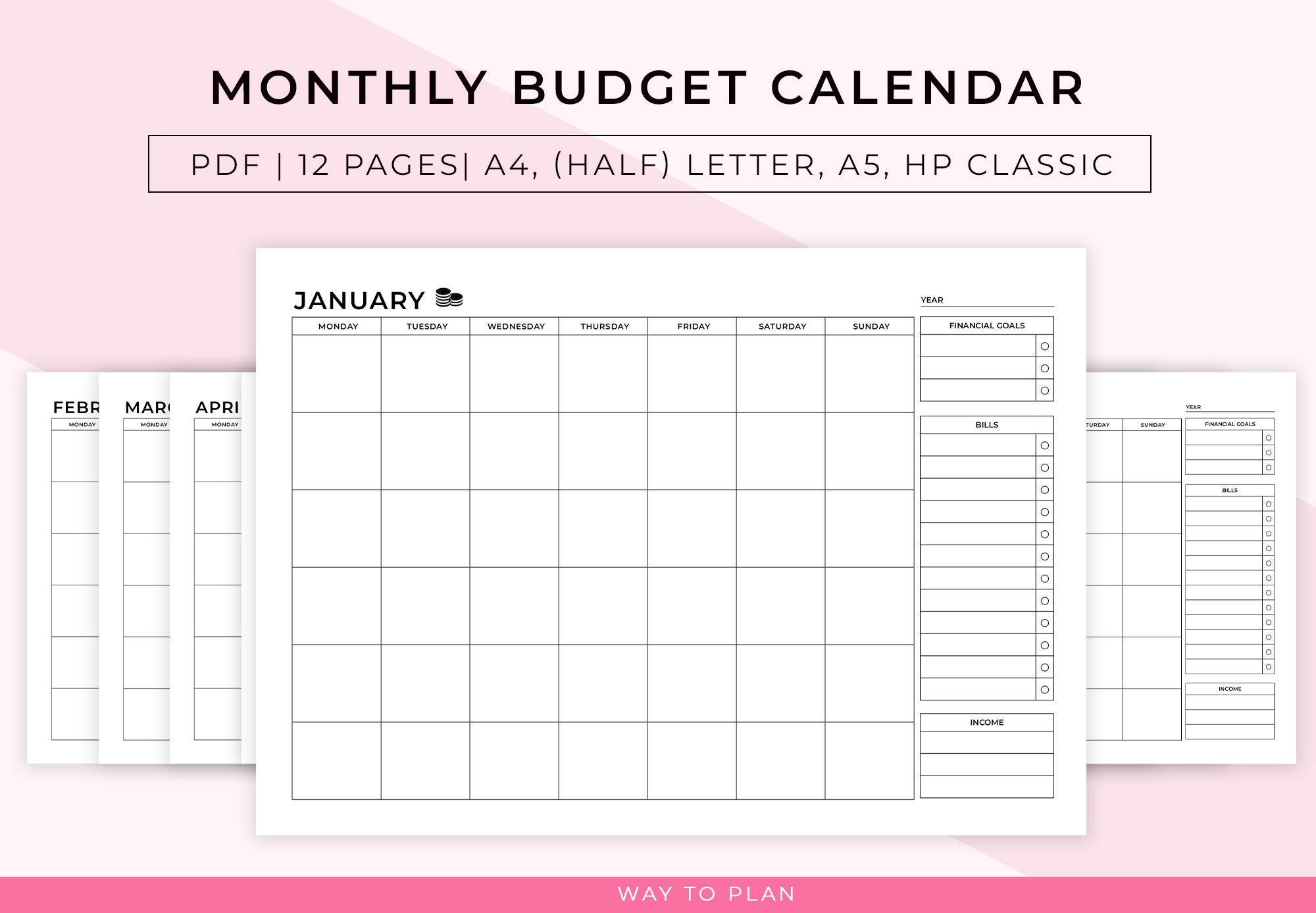
Step 8: Put Due Dates on a Bill Calendar
A budget tells you how much you can spend. A bill calendar tells you when money leaves the account. Cash-flow timing matters when rent is due before the second paycheck or several large bills fall in the same week.
Create a calendar with:
- Paydays or expected income dates
- Rent/mortgage date
- Utility due dates
- Credit-card and loan due dates
- Insurance dates
- Subscription renewal dates
- Automatic savings transfers
If possible, ask providers whether due dates can be changed to better match your pay cycle. Confirm the change before relying on it.
Step 9: Give Yourself a Weekly Spending Number
A monthly flexible-spending limit can still be hard to manage. Convert it into a weekly amount. If you have $400 for groceries plus discretionary household spending over four weeks, a weekly target can make overspending visible earlier.
Do not divide every category equally by four—rent and utilities are not weekly expenses. Use the weekly number for the categories you actively control day to day.

Step 10: Review the Budget Every Week
A budget is a plan, not a prediction. Prices change, bills arrive differently than expected, and life happens. Set aside a short weekly review to:
- Check account balances
- Categorize recent transactions
- Compare spending with category limits
- Move money between categories when priorities change
- Confirm upcoming bills
- Make the planned savings transfer
Adjusting the budget is not “breaking” it. Moving $30 from entertainment to groceries because food cost more than expected is exactly what a flexible spending plan is supposed to allow.
How to Budget When Money Does Not Cover Everything
If reliable income is lower than essential expenses and minimum obligations, the issue cannot be solved by a prettier spreadsheet. Prioritize housing, food, essential utilities, medication, necessary transportation, and other immediate needs. Then contact lenders, utilities, landlords, or service providers early to ask about hardship options or payment arrangements.
Look for the largest recurring costs first. Our guide on cutting monthly expenses without stress focuses on housing, utilities, transportation, subscriptions, fees, and other high-impact categories.
Avoid “guaranteed debt relief” or fast-money schemes that require upfront fees or make promises that sound too good to be true.
Budgeting Apps, Spreadsheets, or Paper?
The tool matters less than consistency. A spreadsheet gives control and privacy. Paper is simple and does not require account connections. A budgeting app can automate transaction imports, categorization, reminders, and household collaboration.
Do not rely on outdated app recommendations. Mint is no longer a standalone budgeting service. Our current 2026 budgeting app comparison covers actively supported options and privacy considerations.
Common Budgeting Mistakes
- Using gross income: build the budget from money you can actually spend.
- Ignoring irregular expenses: create sinking funds for predictable non-monthly costs.
- Setting every category too low: unrealistic limits create constant “failure.”
- Forgetting cash spending: cash purchases still need a category.
- Making the budget only once: review and adjust it regularly.
- Using savings as an afterthought: plan the transfer when possible.
- Trying five systems at once: choose one primary method.
- Counting expected extra income before it arrives: bonuses and side income are not guaranteed.
Monthly Budget Checklist
- Confirm reliable take-home income.
- Review 2–3 months of transactions.
- List fixed, variable, irregular, and flexible expenses.
- Add savings goals.
- Create sinking funds for annual costs.
- Choose a budgeting method.
- Make sure planned spending does not exceed reliable income.
- Add all due dates to a calendar.
- Review spending weekly.
- Adjust categories when real life changes.
Frequently Asked Questions
What is the easiest monthly budget for beginners?
A simple category budget can be easiest: start with take-home income, subtract fixed essentials, estimate variable essentials, set aside irregular expenses, add savings, then create a limit for flexible spending.
Should I use the 50/30/20 rule?
Use it as a reference if it helps, not as a requirement. High housing or healthcare costs can make the percentages unrealistic. Your budget must reflect your actual essential expenses.
What if I overspend one category?
Move money from a lower-priority category if possible and update the plan. If the same category is over budget every month, the original amount may be unrealistic.
How often should I update my budget?
Do a quick review weekly and a full reset at the beginning of each month. Also update it after a major income, housing, debt, or family change.
Can I budget with irregular income?
Yes. Use a conservative income baseline, prioritize essentials, and save part of stronger months to create a cash-flow buffer for weaker months.
Conclusion
A monthly budget that actually works is flexible, realistic, and based on real numbers. Start with take-home income, review several months of spending, include irregular expenses, choose a simple budgeting method, give savings a place in the plan, and review the budget regularly.
Do not judge the plan by whether every category stays perfect. Judge it by whether you know where your money needs to go, can adapt before problems grow, and are gradually building more financial stability.