
Zero-based budgeting is a simple idea: before the month begins, give every dollar of expected income a job. That job might be rent, groceries, transportation, savings, debt payments, an emergency fund, or personal spending. When the plan is complete, income minus all planned categories equals zero.

This does not mean your bank account should reach zero. It means all available money has been assigned intentionally. You can—and usually should—assign money to savings, future expenses, and buffers. For beginners who want more control over where their money goes, zero-based budgeting can be a practical monthly framework.
What Zero-Based Budgeting Means
In a zero-based budget, you start with expected take-home income and assign that amount across spending, saving, and financial goals until nothing is left unassigned.
The basic formula is:
Expected income − planned expenses − savings − other financial goals = $0 unassigned
The “zero” refers to the amount left without a purpose, not the amount left in your checking or savings accounts.

Simple example
| Monthly Category | Planned Amount |
|---|---|
| Take-home income | $3,000 |
| Housing | $1,100 |
| Utilities and internet | $250 |
| Groceries | $450 |
| Transportation | $250 |
| Insurance/health | $200 |
| Emergency savings | $200 |
| Debt payment | $250 |
| Personal/flexible spending | $150 |
| Future irregular expenses | $150 |
| Total assigned | $3,000 |
This is only an example. Your actual categories and amounts should reflect your own income, obligations, household size, location, and goals.
Step 1: Calculate Expected Take-Home Income
Start with money you realistically expect to receive during the budgeting period. For many people that means net pay after taxes and payroll deductions. It may also include reliable side income, benefits, support, or other recurring income.
If your income is predictable
Use the amount you reasonably expect to receive during the month. If you are paid weekly or every two weeks, check the actual pay dates because some months may contain an extra paycheck.
If your income changes
Use a conservative amount based on income you can reasonably count on, then decide in advance what additional income will do when it arrives. Avoid building essential commitments around optimistic income that may not materialize.
Step 2: List Fixed Essential Expenses
Fixed essentials are obligations that are relatively predictable and important to household stability.
Common examples
- Rent or mortgage
- Insurance premiums
- Minimum debt payments
- Childcare
- Phone or internet when necessary
- Required subscriptions or service plans
- Regular transportation payments
Use current real amounts rather than old estimates. If a bill recently changed, update the budget immediately.
Step 3: Estimate Variable Essentials
Variable essentials change from month to month but still need a plan. Groceries, utilities, fuel, transit, household supplies, and some healthcare costs often fall into this category.
Use recent spending as evidence
Look at several recent months of transactions and bills. If groceries averaged $430, setting a $250 target without changing shopping habits is unlikely to be realistic.
The Consumer Financial Protection Bureau provides consumer financial tools that can help households think through spending, bills, credit, and other money decisions.
Step 4: Assign Money to Savings
Savings is not what happens only if money happens to be left over. In a zero-based budget, saving can be a planned category just like rent or groceries.
Possible savings categories
- Emergency fund
- House down payment
- Car replacement or repair
- Annual insurance premium
- Travel
- Education costs
- Holiday or gift spending
- Other future goals

If emergency savings is your priority, our emergency fund guide explains how to choose a practical first target.
Step 5: Plan Debt Payments
Include required minimum payments first. If you plan to pay extra toward a debt, make that extra amount its own category so it does not accidentally get spent elsewhere.
Do not assume every household should follow the same debt-payoff strategy. Interest rates, fees, account terms, emergency savings, income stability, and other priorities matter. If a debt decision is significant or complex, review your actual terms and consider appropriate professional guidance.
Step 6: Add Flexible Spending
A budget that leaves no room for normal personal choices can be hard to maintain. After essentials and priority goals are covered, assign a realistic amount for flexible spending.
Examples
- Dining out
- Entertainment
- Hobbies
- Personal care
- Clothing
- Small unplanned purchases
The amount can be modest, but making it explicit is often more sustainable than pretending you will spend nothing all month.
Step 7: Create Sinking Funds for Irregular Expenses
Many “surprise” expenses are actually predictable expenses with irregular timing. Car registration, annual memberships, school supplies, holiday costs, home maintenance, and insurance premiums may not appear every month, but they can still be planned.
How a sinking fund works
If you expect a $600 annual expense in six months, you could assign about $100 per month toward that future bill. When the expense arrives, the money is already part of the plan.

Keep sinking funds separate in your records so you know that money is reserved even if it sits in the same bank account.
Step 8: Add a Small Buffer
Some months do not follow the plan exactly. A grocery trip costs more, a utility bill changes, or a small necessary expense appears. A modest buffer gives the budget room to absorb normal variation.
A buffer is different from an emergency fund. The buffer handles routine month-to-month variation; the emergency fund is for larger unexpected financial shocks.
Step 9: Adjust Until Every Dollar Has a Job
After assigning all categories, compare total planned allocations with expected income.
If you have money left unassigned
Give it a purpose. You might increase emergency savings, add to a sinking fund, pay extra debt, invest according to your financial plan, or increase a flexible category.
If planned spending is higher than income
You need to adjust the plan before the month starts. Begin with flexible categories, then review larger adjustable expenses. Do not simply pretend the shortfall will disappear.
If you prefer a broader monthly-budget framework, see our monthly budgeting guide.
Step 10: Track Spending During the Month
A zero-based budget is not finished once the categories are written down. Compare actual spending with the plan throughout the month.
A simple weekly check-in
- Check current account balances.
- Review upcoming bills.
- Compare category spending with planned amounts.
- Look for duplicate or unusual charges.
- Move money between categories when priorities change.
- Record any additional income.
If one category goes over, the budget is not automatically “failed.” Decide which other category will decrease so the total plan still works.
What Happens When You Overspend a Category?
Suppose groceries are $40 over budget. Instead of ignoring the overage, choose a source for that $40: dining out, entertainment, a general buffer, or another flexible category.
This is one of the strengths of zero-based budgeting. It makes tradeoffs visible. You can still change your mind, but the money has to come from somewhere.
How Zero-Based Budgeting Differs From the 50/30/20 Rule
The 50/30/20 rule groups spending into broad percentages for needs, wants, and savings or debt goals. Zero-based budgeting is more detailed because every dollar is assigned to a specific category.
| Method | Best Feature | Possible Challenge |
|---|---|---|
| Zero-based budgeting | Very detailed control | Requires regular tracking |
| 50/30/20 | Simple broad framework | Percentages may not fit every household |
| Envelope system | Clear category limits | Can require more manual management |
Our envelope budgeting guide explains another category-based approach if you prefer stronger spending boundaries.
Zero-Based Budgeting With Irregular Income
Freelancers, gig workers, seasonal workers, commission earners, and households with changing hours can still use the method, but the budget should be more conservative.
Try this approach
- Estimate a dependable baseline income.
- Fund essential obligations first.
- Set priorities for extra income before it arrives.
- Build a larger income buffer when possible.
- Update the budget whenever actual income becomes clearer.
For example, extra income might be assigned in a pre-decided order: first to next month’s essential bills, then emergency savings, then debt or another goal.

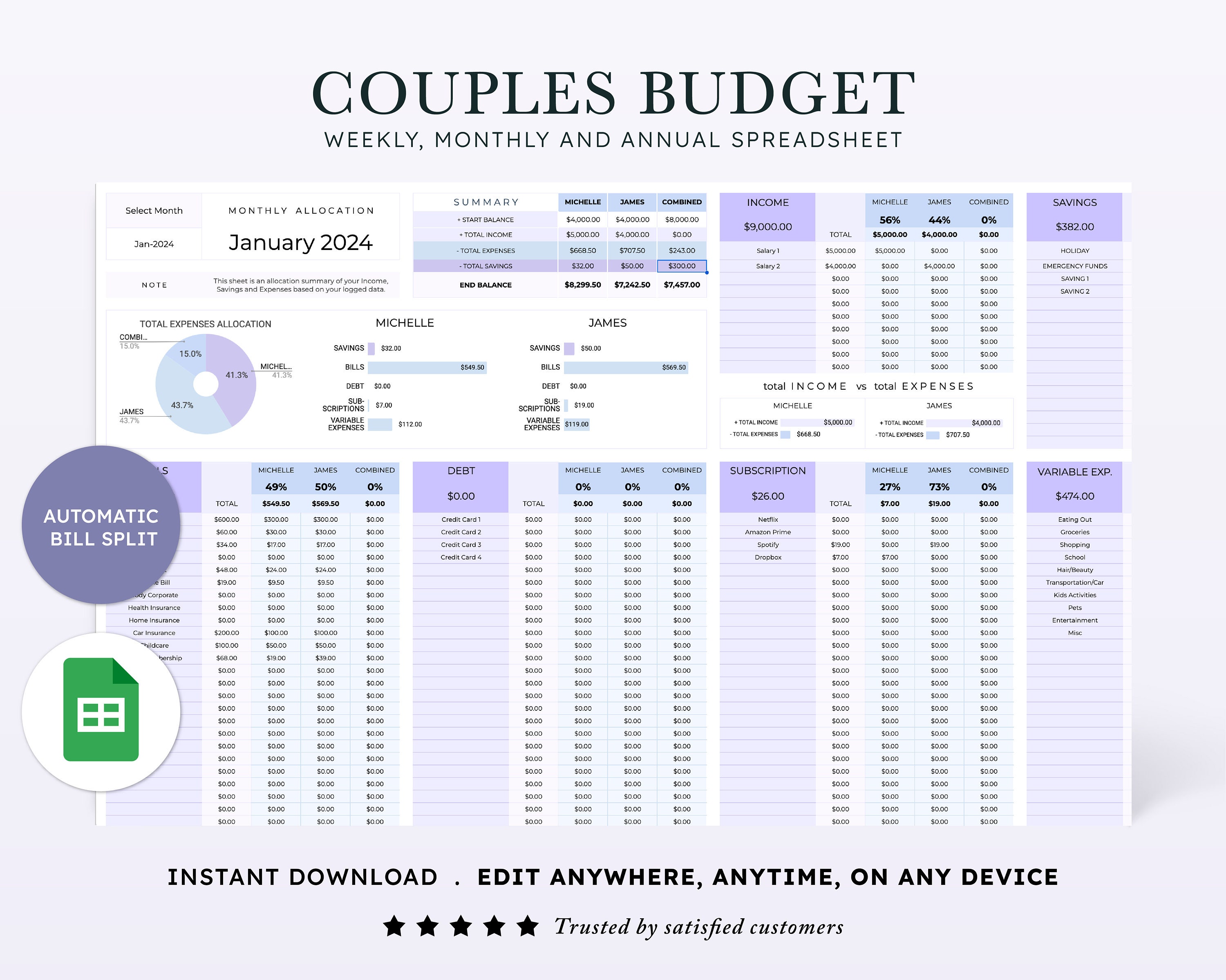
Zero-Based Budgeting for Couples or Families
A household budget works best when the people affected understand the major categories and tradeoffs. Decide together which expenses are essential, what savings goals matter, and how much personal spending each person can use without asking for approval on every small purchase.
Useful household questions
- Which bills must be paid first?
- Which savings goal has the highest priority?
- How much flexible spending is reasonable?
- Which irregular expenses are coming soon?
- How will unexpected income be used?
- How often will we review the budget?
Agreeing on the plan can reduce arguments caused by different assumptions about what money is available.
Zero-Based Budgeting With Multiple Bank Accounts
The budget does not have to match the physical location of every dollar. You may keep money across checking, savings, and other accounts while tracking categories separately.
For example, one savings account might contain money assigned to an emergency fund, car repairs, and annual insurance. Your budget records should show the separate purposes even if the bank shows one combined balance.
Do You Need a Budgeting App?
No. A spreadsheet, notebook, bank categories, or budgeting app can all work. The best system is one you will update consistently.
If you prefer software, our budgeting apps for beginners in 2026 explains several current options and what to consider before connecting financial accounts.
Common Zero-Based Budgeting Mistakes
Thinking zero means spending everything
It does not. Savings is a valid assignment. The point is intentional allocation.
Using unrealistic category limits
A budget based on wishful numbers will constantly break. Use recent spending as a starting point and improve gradually.
Forgetting annual and irregular costs
Use sinking funds so predictable future expenses do not appear as emergencies.
Leaving no flexibility
Build a buffer and allow categories to change when necessary.
Tracking too late
Waiting until the end of the month removes your chance to adjust. Check progress weekly or at another interval that works for you.
Making too many tiny categories
More detail is not always better. If twenty small categories make the system exhausting, combine them into useful groups.
A Beginner Zero-Based Budget Template
| Category | Planned | Actual |
|---|---|---|
| Income | ___ | ___ |
| Housing | ___ | ___ |
| Utilities | ___ | ___ |
| Food | ___ | ___ |
| Transportation | ___ | ___ |
| Insurance/health | ___ | ___ |
| Debt minimums | ___ | ___ |
| Emergency savings | ___ | ___ |
| Sinking funds | ___ | ___ |
| Flexible spending | ___ | ___ |
| Buffer | ___ | ___ |
Frequently Asked Questions
Does zero-based budgeting mean I should have $0 in my bank account?
No. It means every dollar of expected income has a planned purpose. Savings and account buffers are part of the budget.
Is zero-based budgeting good for beginners?
It can be, especially for people who want detailed control. Start with a small number of categories and add complexity only if it helps.
What if my income changes every month?
Use a conservative baseline, fund essentials first, and have a plan for allocating extra income when it arrives.
Can I move money between categories?
Yes. A budget is a plan, not a punishment. If priorities change, move money deliberately and keep the overall total aligned with available income.
How often should I review the budget?
A quick weekly review works well for many households, plus a full reset before each new month. Adjust the frequency to your needs.
Zero-Based Budget Checklist
- Calculate expected take-home income.
- List fixed essentials.
- Estimate variable essentials from recent spending.
- Assign savings and debt goals.
- Create sinking funds for irregular costs.
- Add realistic flexible spending.
- Include a small buffer.
- Adjust until every dollar has a purpose.
- Track actual spending during the month.
- Review and rebuild the plan for the next month.
Conclusion
Zero-based budgeting gives every dollar a clear purpose before it is spent. That can make savings, debt payments, irregular expenses, and everyday tradeoffs easier to see. The method is detailed, but it does not need to be complicated.
Start with your real income and recent expenses, keep the categories manageable, and review the plan regularly. The goal is not to predict the month perfectly. It is to make conscious decisions when reality differs from the plan instead of wondering at the end of the month where the money went.