
Buying a home can feel affordable right up to the moment you see the amount due at closing. The monthly mortgage payment may fit your budget, yet the final paperwork can still include lender charges, title services, appraisal costs, prepaid interest, insurance, taxes, escrow deposits and other items. That is why understanding mortgage closing costs before you make an offer is just as important as comparing interest rates.
This guide explains what the main charges mean, which numbers deserve the most attention, and how to compare one lender with another without getting lost in a long list of fees. It is written for first-time and budget-conscious buyers who want a practical way to plan cash, question unexpected charges and avoid reaching closing day with too little money available.
The goal is not to memorize every possible fee. The goal is to understand the structure well enough to ask better questions and make a safer decision.
Start With Two Different Numbers: Closing Costs and Cash to Close
People often use these terms as if they mean the same thing, but they are different.
What are mortgage closing costs?
Closing costs are the upfront charges connected with getting the mortgage and transferring ownership of the property. They can include lender fees, third-party services, government charges, prepaid expenses and initial deposits for an escrow account.
What is cash to close?
Cash to close is the amount you are expected to bring or send for the transaction after the full calculation is made. It can include your down payment plus closing costs, then reflect credits, deposits already paid and other adjustments that apply to your deal.
This difference matters. A buyer may hear that the loan has a certain level of closing costs and assume that is the entire amount needed on closing day. It may not be.
Use the Consumer Financial Protection Bureau Loan Estimate explainer to see where estimated closing costs and estimated cash to close appear on the standard form.
Use the Loan Estimate as Your Main Comparison Tool
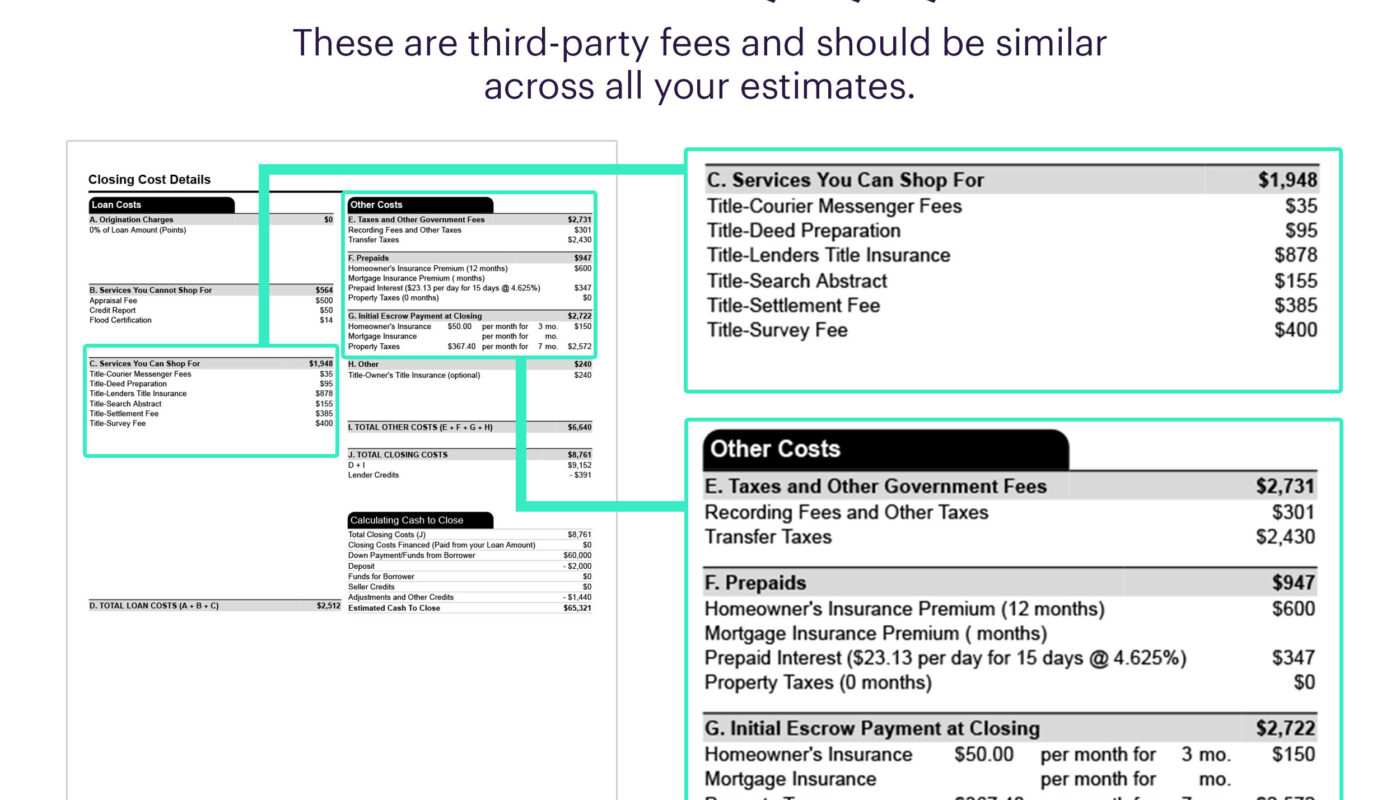
For most standard mortgages, a lender provides a Loan Estimate after receiving the information that makes up an application. The form gives you a structured way to compare loan terms, projected payments and estimated costs.
The Consumer Financial Protection Bureau explains that the Loan Estimate is a three-page form and is generally provided within three business days after a lender receives an application.
Do not compare offers by looking at only one number. Put the forms side by side and review the same sections in the same order.
Check these items first
- Loan amount
- Interest rate
- Projected principal and interest payment
- Mortgage insurance, if any
- Estimated taxes and insurance
- Total estimated monthly payment
- Estimated closing costs
- Estimated cash to close
- Whether the rate is locked
- Whether the loan has points, lender credits or unusual features
If two lenders quote the same interest rate, their total cost can still differ. One lender may charge more origination fees. Another may offer a lender credit in exchange for a higher rate. A third may have lower lender charges but different third-party estimates.
Understand Lender Charges Before You Negotiate
Lender charges are the costs the lender controls directly. Names vary. You may see origination, underwriting, processing, administration or application charges.
The CFPB mortgage cost guide notes that lenders can label charges in different ways, so the total amount matters more than the exact label.
Do not let fee names distract you
Imagine Lender A charges a $900 origination fee and no separate underwriting fee. Lender B charges a $400 origination fee plus a $650 underwriting fee. Looking only at the origination line would make Lender B seem cheaper even though the combined lender charges are higher.
For a clean comparison, group the lender-controlled charges together. Then compare the total with the interest rate and any lender credits.
Know What Mortgage Points Actually Do
Discount points are an upfront cost paid in exchange for a lower interest rate. One point is based on a percentage of the loan amount, but the amount of rate reduction you receive for paying points is not fixed across lenders or days.
Points can make sense in some situations, but they are not automatically a bargain. A lower rate helps only if you keep the loan long enough for the future savings to recover the upfront cost.
Use a simple break-even test
Suppose one option costs $3,000 more upfront but lowers the payment by $45 per month. Divide the additional upfront cost by the monthly savings. In this simplified example, it would take about 67 months to recover that extra cost.
This is not a complete mortgage analysis because taxes, insurance, refinance plans and other factors can matter. But it is a useful first question: How long would I need to keep this loan before the extra upfront cost pays for itself?
Separate Third-Party Costs From Lender Costs
Some closing expenses pay companies other than the lender. These can include an appraisal, credit-related services, title work, settlement services, recording-related items and other services required for the transaction.
Third-party costs can vary by property, location and provider. Some services may be shoppable, while others may not be practical to change.
Common third-party categories
- Appraisal
- Title search or title services
- Lender’s title insurance
- Owner’s title insurance where selected or customary
- Settlement or closing services
- Survey where required
- Attorney fees where applicable
- Inspection-related items that may be outside the lender disclosure
Do not assume a lower lender fee means a cheaper transaction if the third-party estimates are much higher. Compare the full picture.
Government and Recording Charges Can Depend on Location
Real estate transactions can include recording charges, transfer-related taxes or other government fees. The exact structure depends on where the property is located and how the transaction is handled.
These costs are not usually the main area where a lender competes. Still, they matter for your cash plan. Ask your lender or settlement professional which local charges apply and whether any are paid by the buyer, seller or split by local custom or contract.
Prepaid Costs Are Not the Same as Service Fees
A common source of confusion is the prepaid section. These amounts are not always a fee paid for a service. They often represent expenses you would have paid as a homeowner anyway, but the timing requires money to be collected before or at closing.
Examples of prepaid items
- Homeowners insurance premium
- Prepaid mortgage interest
- Property-related taxes depending on timing
- Initial amounts needed for an escrow account
That distinction helps when comparing lenders. If one Loan Estimate includes a larger initial escrow amount because of the projected tax schedule, it does not automatically mean the lender itself is charging more.
Initial Escrow Deposits Can Increase the Amount Due at Closing

If your mortgage uses an escrow account, part of each monthly payment is set aside for certain property costs, often taxes and homeowners insurance. The servicer then pays those bills when due.
You may need to fund the escrow account at closing so enough money will be available before the first large bill is due. The amount can vary based on the closing date, tax schedule and insurance timing.
For a deeper explanation, see our guide to homebuying readiness and mortgage preparation.
Seller Credits and Lender Credits Can Reduce Upfront Cash, but Read the Trade-Off
A credit can reduce the amount you need to pay directly at closing. That can be valuable for a buyer who wants to preserve emergency savings. But always ask what you are giving up in exchange.
Lender credit example
A lender may offer to cover part of your closing cost in exchange for a higher interest rate. The lower upfront amount may help today, while the higher rate may increase the cost of borrowing over time.
Seller credit example
A seller may agree to contribute toward allowed closing costs as part of the purchase contract. The amount and permitted use can depend on the loan program and transaction.
Do not evaluate a credit in isolation. Compare the final interest rate, monthly payment, cash to close and the time you expect to keep the mortgage.
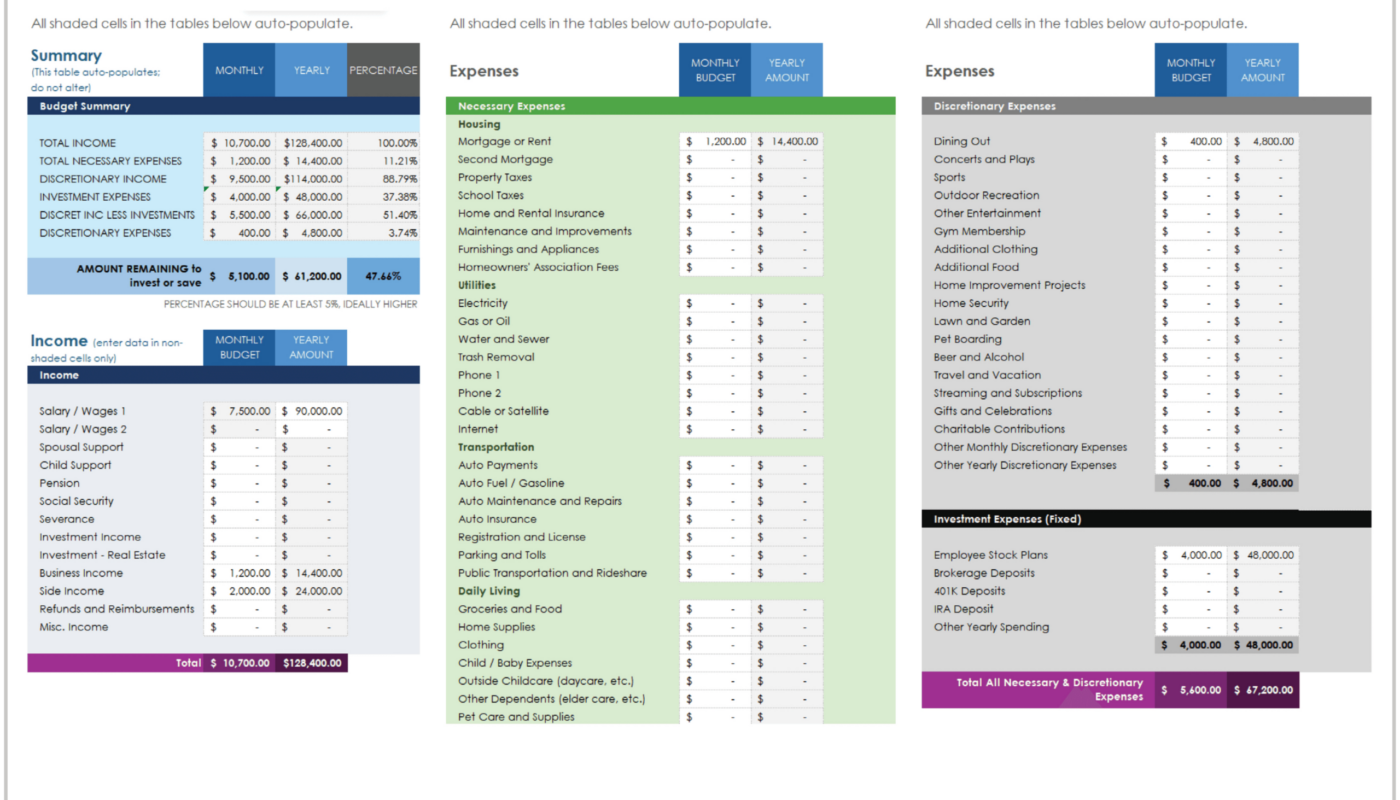
Build a Closing-Cost Budget Before You Make an Offer
The safest time to think about closing costs is before you are emotionally committed to a property.
Create five cash buckets
- Down payment: money applied toward the purchase price.
- Closing costs: lender, third-party, government and settlement charges.
- Prepaids and escrow: insurance, interest, taxes and reserve deposits as applicable.
- Moving and immediate setup: movers, utilities, locks and basic supplies.
- Emergency reserve: cash that remains available after closing.
Do not treat the emergency reserve as extra closing money. Homeownership begins with risk. An appliance can fail, a car can need repair, or a work schedule can change during the same month you move.
Our emergency fund guide can help you set a realistic reserve target.
Compare Offers With a Same-Scenario Worksheet
A useful comparison keeps the basic assumptions as similar as possible. Ask lenders for quotes based on the same loan amount, down payment, loan type and approximate lock period.
| Item | Lender A | Lender B | Lender C |
|---|---|---|---|
| Interest rate | |||
| Points | |||
| Lender charges | |||
| Lender credit | |||
| Estimated third-party costs | |||
| Prepaids/escrow | |||
| Estimated cash to close | |||
| Total monthly payment |
Then ask each lender to explain the biggest differences. A good answer should be specific, not vague.
Use the Closing Disclosure as Your Final Check
Near closing, the estimate becomes final. The CFPB Closing Disclosure explainer is designed to help borrowers review the final loan terms and charges.
For most covered mortgages, the Closing Disclosure must be provided at least three business days before closing. Use that period to compare it with your most recent Loan Estimate.
Check these differences carefully
- Did the interest rate change?
- Did the loan amount change?
- Did points or lender credits change?
- Did lender fees increase?
- Did the estimated cash to close change?
- Are taxes, insurance and escrow amounts understandable?
- Is the monthly payment what you expected?
- Do you recognize every large charge?
If a number looks wrong, ask before signing. Do not assume that closing day is too late to question an error.
Watch for Wire-Fraud Risk
Home closings can involve large transfers of money. Criminals sometimes impersonate real estate professionals, lenders or settlement companies and send false wiring instructions.
Before sending funds, verify instructions using a trusted phone number you already have for the title company, attorney or settlement agent. Do not rely only on contact details inside a new email that tells you payment instructions changed.
A Realistic Buyer Example
Consider Maya, who has saved $28,000 for a purchase. She plans to use $18,000 toward the down payment. At first, she assumes the remaining $10,000 will comfortably cover everything else.
Her Loan Estimate shows lender and third-party charges, prepaid insurance, prepaid interest and an initial escrow deposit. The estimated cash needed is higher than she expected. Instead of using her entire reserve, she compares two additional lenders, asks the seller for a permitted contribution during negotiation and chooses a slightly less expensive property.
The important part is not that Maya found a magic way to erase fees. She used the disclosure early enough to change the plan.
Common Closing-Cost Mistakes
- Saving only for the down payment.
- Comparing interest rates without comparing fees.
- Looking at one lender only.
- Assuming all fees are negotiable or all are fixed.
- Ignoring prepaid taxes and insurance.
- Using every dollar of savings at closing.
- Not comparing the Closing Disclosure with the Loan Estimate.
- Accepting a lender credit without checking the rate trade-off.
- Sending closing funds from unverified email instructions.
- Waiting until signing day to question a large change.
Frequently Asked Questions
Are closing costs the same for every mortgage?
No. They can vary by lender, loan program, property, location, title provider, insurance cost, closing date and other transaction details.
Can I negotiate mortgage closing costs?
Some lender-controlled charges and shoppable services may be areas to compare or negotiate. Government charges and some third-party expenses may offer less flexibility. The best approach is to compare complete Loan Estimates.
Is cash to close just my down payment?
No. Cash to close can include the down payment and other transaction costs, then account for credits, deposits already paid and adjustments.
Why did my cash to close change?
Changes can come from updated loan terms, insurance, taxes, escrow calculations, credits, property-related adjustments or corrected estimates. Ask the lender or settlement professional to explain the specific change.
Should I choose the lender with the lowest closing costs?
Not automatically. Compare the interest rate, monthly payment, points, credits, fees and how long you expect to keep the loan. A low upfront cost can come with a higher long-term borrowing cost.
Conclusion: Compare the Whole Mortgage, Not One Fee
Mortgage closing costs become easier to manage when you separate lender charges, third-party services, government costs, prepaids and escrow deposits instead of treating everything as one mystery number.
Start early. Build a cash plan before making an offer. Compare Loan Estimates using the same scenario. Protect an emergency reserve. Then use the three-day Closing Disclosure review period to check that the final loan still matches what you expected.
A good closing plan is not about finding a mortgage with no costs. It is about understanding where your money is going, spotting trade-offs and making sure the final transaction fits your budget after the keys are in your hand.